


Ravio updatesBenchmarking
Ravio partners with Comp to bring you trusted Brazil benchmarks
Ravio has partnered with Comp to bring trusted Brazil benchmarks directly into the Ravio platform.

Mercer has longstanding credibility as a traditional salary survey provider. However, with real-time salary benchmarking tools now on the market, many companies are exploring alternatives to Mercer’s salary survey data.
Mercer’s give-to-get model also requires manual survey submissions and job mapping — adding to your workload and leaving room for errors that can skew benchmarks and misguide pay decisions.
So, as you’re exploring Mercer alternatives, we’ve reviewed the market to find the best Mercer alternatives in 2026 – comparing 11 compensation benchmarking companies side-by-side with Mercer.
Whether you’re choosing your first benchmarking provider, switching from Mercer, or just supplementing its data, you’ll see how each stacks up on coverage and compensation management features to find the right fit for your organisation.
Click here to switch straight to the list of Mercer alternatives.
Mercer is a global HR consultancy that helps organisations design and implement strategic compensation projects.
Alongside its consulting services, Mercer runs salary surveys and sells the compiled results as standalone datasets. It also provides online platforms for accessing and analysing compensation data.
Here’s a breakdown of Mercer’s main offerings:
1. Mercer consulting services
Consulting is Mercer’s core offering. These services cover a wide range of compensation practices, including total rewards strategy, job evaluation, pension schemes, and employee benefits.
2. Mercer salary benchmarking data
Mercer runs salary surveys – gathering submissions from companies on how they compensate their employees (base salary, equity, variable pay, and benefits). The results are then compiled into a dataset and sold as benchmarking data for People and Reward teams.
Mercer runs many surveys and sells a variety of datasets, such as:
3. Mercer WIN® (Workforce Intelligence Network)
Mercer WIN is Mercer’s online data delivery platform that gives you access to the survey data you buy from the consultancy.
In the past, salary survey data purchased from Mercer used to be delivered in a spreadsheet, which users may find complex to use. Today, you can choose to have it delivered via Mercer WIN where you can view, filter, and analyse benchmarking data you’ve purchased in-platform or download it as an Excel file.
Access to Mercer WIN is included when you buy eligible survey data — it doesn’t include datasets you haven’t purchased.
4. Mercer Comptryx
Acquired by Mercer in 2015, Comptryx is Mercer’s salary benchmarking software, providing compensation and market trends data for the tech industry.
Comptryx operates on a give-to-get survey submission model – organisations submit their employee compensation data to access benchmarks, with the benchmarks reported to be updated quarterly (as opposed to real-time solutions like Ravio, where data is continuously updated via HRIS integrations).
It’s available as a standalone subscription, not included with Mercer TRS or WIN access.
With its broad, global data, Mercer is ideal for large enterprises and multinational organisations in regulated industries such as banking, pharmaceuticals, and manufacturing that have dedicated compensation teams to manually submit, map, and analyse compensation data.
Given everything Mercer offers, the breadth of its services can feel overwhelming. And because Mercer is traditionally a consultancy rather than a modern software provider, its tooling can, in our opinion, be less suited to high-growth or scaling tech teams that need intuitive software and real-time data.
Whilst Mercer is a well-known name with longstanding credibility, the manual nature of traditional salary survey processes mean that benchmarking data generated using these approaches can be out-of-date and prone to human error – unlike modern tools which integrate directly with company HRIS systems to ensure continuous updates and no human error.
Plus, the salary survey submissions required to use Mercer’s data also tend to be lengthy, manual processes for HR teams to complete. Both of these aspects explain why organisations may be looking for alternatives to Mercer.
Here’s a more detailed look at the pros and cons of using Mercer for salary benchmarking:
The main benefits of using Mercer salary benchmarking data are:
The key limitations of using Mercer for salary benchmarking are:
Mercer alternatives generally fall into three categories:
Some companies also turn to job adverts or employee-reported sites like Glassdoor for free salary data. But because this data is unverified, based on historical averages, and too broad for like-for-like benchmarking, we haven’t included them here as reliable Mercer alternatives.
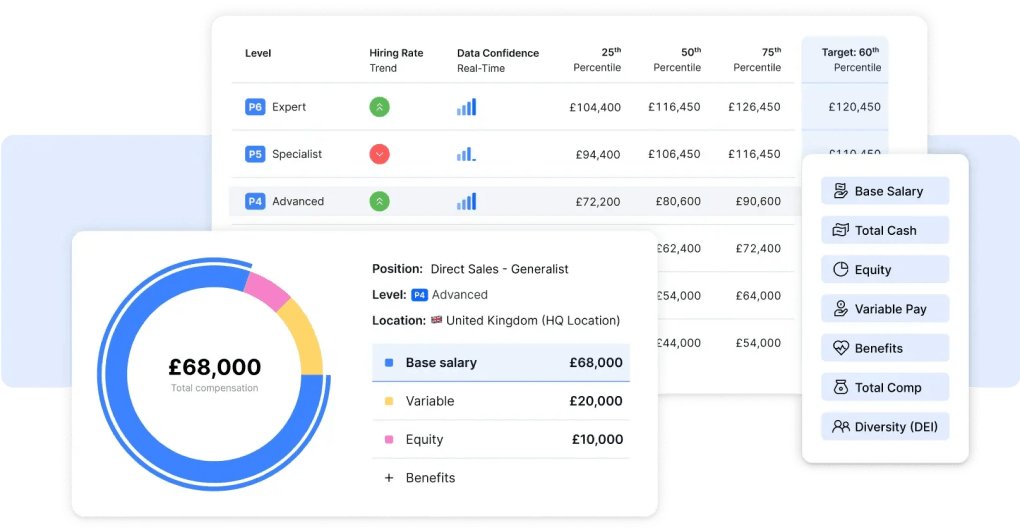
Ravio is a salary benchmarking software with built-in end-to-end compensation management tools – ideal for high-growth global tech teams, particularly those with a strong presence in Europe.
Key features:
Mercer vs Ravio:
Unlike Mercer’s manually submitted, point-in-time salary survey data, Ravio delivers real-time benchmarks via HRIS integrations – removing manual errors and keeping benchmarks current.
In terms of coverage, Mercer’s dataset leans toward legacy industries with tech insights sold separately (via Comptryx). Ravio focuses on high-growth tech companies and offers filters by location, stage, and headcount for added relevance.
As for compensation management, Mercer provides data in spreadsheets or its WIN portal, supplemented with consultancy projects and standalone tools. Ravio instead delivers a modern end-to-end compensation platform powered by accurate, real-time benchmarks.
Traditional salary survey providers like Mercer may come with gaps in terms of data lag and relevancy, but they’ve been a trusted salary data source for a long time.
Because of this, it’s more and more common for large, established companies to use multiple salary data providers to ensure full coverage for all roles, locations, and levels required – as different providers have different market focus.
Using both Mercer and Ravio gives a secondary data source to validate trends – and Ravio addresses the key gaps in Mercer’s salary data, making it the perfect complement:
Plus, Ravio's custom market data feature means you can upload your Mercer data into the Ravio platform, to use and compare both sources.
“Access to Ravio's live market data means no more headaches from delayed data sets or having to age compensation data, which has been a real friction point for us in the past.” – Jodi S, VP of People at Mollie
Pave is a US-based salary benchmarking provider offering real-time compensation data in the US and Canada — making it ideal for US-based startups and enterprises in tech, healthcare, and gaming industries.
Key features:
Mercer vs Pave:
Compared to Mercer’s salary survey data, Pave provides fresher benchmarks through HRIS, ATS, and equity integrations that update every month.
While Pave’s dataset is strongest for US roles with lighter coverage globally, Mercer maintains broader global benchmarks.
For compensation management, Pave delivers end-to-end tools for salary bands, pay equity, and review planning in one platform, whereas Mercer combines consultancy services with add-on tools.
Compa is an offers-based benchmarking provider — ideal for US enterprises in tech, life sciences, and retail that want to supplement traditional salary surveys with real-time offers data.
Key features:
Mercer vs Compa:
Unlike Mercer, which offers annual compensation surveys with global coverage, Compa provides real-time offer data with stronger coverage for US roles only.
Compared to Mercer’s decades of aggregated submissions, Compa’s dataset is much smaller and focused on active offers. It excludes existing employee salaries and is limited to high-volume roles that appear frequently in Applicant Tracking Systems (ATS), making Compa’s data less reliable for accurate benchmarking.
That said, Compa does offer advantages over Mercer. Whilst Compa also doesn’t automate job matching, it does have built-in outlier detection to flag mismatches and ensure accuracy.
When it comes to compensation management features, we think both fall short compared to dedicated compensation management platforms. Mercer is primarily a data provider, while Compa focuses on offers-only data with basic tools for salary bands, pay equity, and compensation reviews – meaning you’ll still need to heavily rely on spreadsheets.
CompUp is a salary benchmarking provider with an India-only dataset – making it ideal for India-based startups, mid-market companies, and service firms.
Key features:
Mercer vs CompUp
Compared to Mercer’s global dataset, CompUp’s benchmarks are tailored exclusively to the Indian talent market – making it useful for local startups but less relevant for companies hiring globally.
CompUp’s industry scope is also narrow, so its benchmarks can also be unreliable for niche, senior, or globally distributed roles.
As for comp management features, CompUp offers built-in tools for budgeting, merit cycles, and approvals – functionality that Mercer lacks.
Carta Total Comp is the salary benchmarking tool from cap table platform Carta — ideal for VC-backed, US-based private companies already using Carta to manage ownership and equity.
Key features:
Mercer vs Carta Total Comp
Compared to Mercer’s broad total compensation data, Carta is strongest in equity benchmarking, while its salary data is less robust since the platform is primarily built for cap table management.
In fact, Carta focuses on privately held US startups already using its cap table management platform – making its benchmarks less relevant for public companies or those hiring globally.
In contrast to Mercer’s compensation management tools (available as add-ons), Carta offers stronger, end-to-end functionality. For existing Carta users, setting up Total Comp is also as simple as plug and play.
Compensation IQ by Qlearsite is a salary benchmarking provider that combines third-party data – ideal for public sector organisations, charities, and nonprofits across Europe, with particular strength in the UK.
Key features:
Mercer vs Compensation IQ:
Unlike Mercer’s global salary benchmarks, Compensation IQ is a data aggregator – combining benchmarks from user uploads, job posting ranges, and Mercer itself.
Subsequently, its compensation data isn’t real-time or highly reliable as up-to-date, accurate benchmarks from modern salary benchmarking tools like Ravio. The sources Compensation IQ draws from may be subject to human error and lagging due to the data collection process (salary surveys), or unverified and inconsistent (job postings) – making data less relevant for fast-moving tech companies.
In terms of compensation management features, Mercer doesn’t provide automated job mapping, while Compensation IQ does. It also integrates with HRIS to compare internal salaries with external data, though not to build a real-time dataset.
Assemble is a compensation management tool sourcing salary benchmarks via Carta – ideal for privately held healthcare and biotech companies in the US.
Key features:
Mercer vs Assemble:
Unlike Mercer, which offers proprietary compensation data with global coverage, Assemble owns only a small, native biotech dataset and relies on manual uploads from users, plus an integration with Carta Total Comp for broader, US-focused data. .
While this allows you to pull in multiple data sources, the benchmarks aren’t as real-time as those from modern providers like Ravio that automatically embed proprietary data. Meaning: Assemble’s data freshness ultimately depends on the update cycles of its external sources.
It also adds manual work for users, who need to upload, manage, and map multiple datasets – similar to work that goes into Mercer’s manual survey submissions and role-mapping. As a result, Assemble still leaves the same gaps that drive teams to consider Mercer alternatives.
As for compensation management features, Assemble provides end-to-end tools, while Mercer relies on separate add-ons.
Barley is a compensation management platform that sources benchmarking data from third-party providers like Mercer – ideal for small businesses in the US and Canada.
Key features:
Mercer vs Barley:
Where Mercer is a consultancy that sells annual survey data and add-on tools for compensation management, Barley is a dedicated compensation management tool with third-party data, HRIS integrations, and built-in workflows.
However, because Barley doesn’t maintain a proprietary dataset, its benchmarks still rely heavily on traditional salary surveys. That means the data lags behind the market, carrying the same risks of being outdated, error-prone, or incomplete – limiting its usefulness for competitive pay decisions.
Lattice is a broad people management platform that has expanded to offer compensation benchmarking via third-party sources – ideal for mid-market teams that need basic total compensation coverage within a broader people platform.
Key features:
Mercer vs Lattice:
Unlike Mercer’s consultancy-first model with salary surveys and optional add-on tools, Lattice delivers a broader HR platform with performance reviews, engagement surveys, and compensation features, so their core focus areas differ.
Both rely on periodic salary survey data rather than real-time HRIS integrations. There are also no talent market insights, such as live market trends, hiring rates, and attrition data, essential for competitive new hire compensation decisions.
HiBob is a broad HRIS platform with a compensation module, where salary benchmarks are provided via Mercer Comptryx – ideal for SMBs with simple compensation needs that they want to manage within their performance platform.
Key features:
Mercer vs HiBob:
Unlike Mercer’s single-source salary surveys, HiBob combines Mercer data with other third-party providers inside a broader people management platform. This makes HiBob more useful for mid-market companies that want compensation insights embedded within their HR workflows.
However, both Mercer and HiBob lack real-time insights since HiBob’s benchmarks ultimately refresh in line with Mercer’s periodic survey updates.
For compensation management, HiBob includes simple, built-in tools for comp reviews, pay equity analysis, and reporting — whereas Mercer follows a consultancy-first model supported by optional add-on tools.
That said, HiBob’s capabilities are still limited compared to specialised benchmarking software. Its data lacks specialised tech insights, making it less effective for high-growth or tech-focused companies.
Mercer is just one of several HR consultancies that provide salary data through the same salary survey process – others include:
Some of these providers today have a platform for analysing the salary survey results they sell. However, these are all consultancy-first benchmarking providers, so their platforms tend to be outdated and difficult to use.
Data limitations are also similar to Mercer’s: subject to manual survey submissions and may take months for the data to reach you.
When selecting an alternative to Mercer’s salary benchmarking solution, review the following key factors to assess your organisational needs:
Mercer is great as a data source for large, multinational organisations that need global benchmarks from a credible name.
But if you’re a high-growth tech company in a competitive talent market, you might find Mercer salary survey data doesn’t quite fit your needs, due to the manual nature of survey submissions and data delivery, as well as the challenges with potentially outdated data when you need to know what’s changing in the market right now.
In that case, a modern compensation platform with real-time benchmarks and built-in compensation management features like Ravio may serve you far better.
Explore the most comprehensive real-time total reward data set with 3 benchmarks for free, or if you’d like a full tour of the Ravio platform book a demo with one of our experts.
Mercer is a credible brand but, because its benchmarks rely on traditional salary survey collections rather than real-time HRIS integrations, its insights can lag behind the market and may not reflect current pay trends. The manual nature of traditional salary survey submissions also leaves such data prone to human error.
Mercer’s main compensation software is Mercer Comptryx, originally acquired in 2015. It provides salary benchmarking and market trends data for the tech industry, based on Mercer’s give-to-get survey model. Comptryx is sold as a standalone subscription — separate from Mercer’s global Total Remuneration Survey (TRS) and its online survey data portal, Mercer WIN.
Unless you purchase Mercer ePrism, Mercer survey data does not integrate directly with HRIS systems. To compare benchmarks with your employee data, HR teams must manually combine Mercer datasets with internal HRIS exports – a process that has to be repeated every time data changes.
Mercer Total Remuneration Survey (TRS) is Mercer’s core global salary survey. Mercer WIN is the online platform used to access TRS or other survey data you purchase. Mercer Comptryx is a separate subscription product for the tech industry, offering salary benchmarking and market trends based on Mercer’s give-to-get survey model.
Yes. Modern salary benchmarking platforms like Ravio, Pave, and Figures integrate directly with HRIS systems to provide live salary benchmarks that update automatically. Unlike Mercer’s manually collected survey data, these tools reflect current market conditions and internal pay changes in real time – typically making them more reliable for fast-moving compensation decisions.
Salary surveys are still used, but their relevance is fading fast. Because they’re only updated once or twice a year and rely on manual submissions, the data is often outdated and error-prone by the time you receive it. Most surveys also pull from large, legacy enterprises, so benchmarks rarely reflect your company’s size, stage, or region — which is why many companies now turn to real-time benchmarking tools that integrate with HRIS data.
Salary surveys are still used, but many companies now complement annual surveys with real-time sources. Because salary surveys are typically only updated once or twice a year and rely on manual submissions, the data is often outdated by the time you receive it and can be error-prone. Most surveys also pull from large, legacy enterprises, so benchmarks rarely reflect your company’s size, stage, or region – which is why many companies now turn to real-time benchmarking tools that integrate with HRIS data.
The best salary benchmarking tool meets your organisational needs — integrating with your HRIS systems and offering real-time salary and total rewards data. It should also offer strong data coverage tailored to your needs, whether that’s regional benchmarks or global market data, depending on your team’s structure and hiring footprint.
Your monthly dose of market insights and expert perspectives
Ravio has partnered with Comp to bring trusted Brazil benchmarks directly into the Ravio platform.
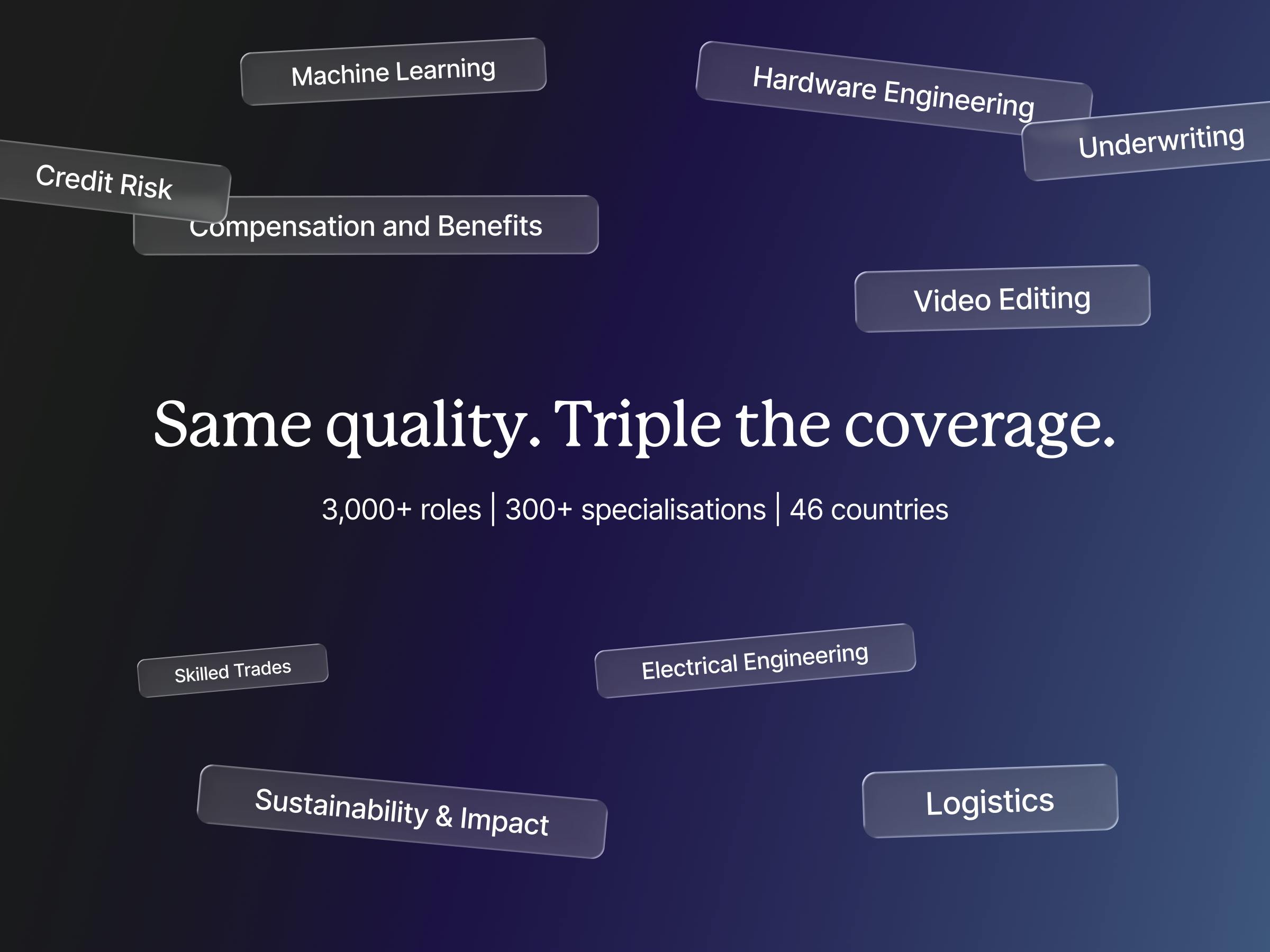
Ravio now benchmarks up to 300 positions in 46 countries. So you can hire the teams you need to scale

Every Ravio benchmark now shows exactly how it was built so you can explain your compensation decisions with clarity, not guesswork.