


Ravio updatesBenchmarking
Ravio partners with Comp to bring you trusted Brazil benchmarks
Ravio has partnered with Comp to bring trusted Brazil benchmarks directly into the Ravio platform.

Because accurate, up-to-date salary benchmarking data is critical for offering fair, market-competitive pay, choosing the right data source is essential.
Historically, annual salary surveys from consultancies like Radford were the default source for this data. But their manual data access and submission processes made them both hard to use and prone to inaccuracies.
Then there’s benchmarking data from employee-reported salary platforms like Glassdoor or Michael Page. But those, too, offer highly unreliable data that’s unfit for effective compensation planning.
This is where salary benchmarking tools come in.
Salary benchmarking tools like Ravio are specifically designed to solve these problems, with reliable, relevant, real-time compensation data — hosted in a user-friendly platform.
So in this guide, we’ll help you:
There are three main data sources that People and Reward Leaders rely on for salary benchmarking, and some are (much) more reliable than the others:
Here’s a brief overview of how these sources compare with a detailed breakdown of each factor below:
Salary surveys e.g. Radford | User-reported data e.g. Glassdoor | Real-time salary benchmarking tools e.g. Ravio | |
|---|---|---|---|
Salary benchmarking data delivery | Benchmarks delivered in a spreadsheet. Some providers offer data online, but limited software capabilities. | Salary range via job adverts or online salary checker tools. | External benchmarks and internal salary data accessible 24/7 via a software platform. |
Salary benchmarking data recency | Point-in-time salary data gathered via salary surveys conducted annually. | Unknown for job adverts. Average from all submissions for Glassdoor. | Real-time salary data, constantly updated via HRIS integrations. |
Salary benchmarking data accuracy and reliability | Risk of human error due to manual salary survey submissions. | Highly unreliable due to lack of context and verification. | Highly accurate, no risk of human error due to integrations that pull salary data directly from HRIS integrations. |
Salary benchmarking data pool relevance | Broad global data pool, but skewed to large legacy organisations. | A data pool of one for job adverts, and an amalgamation of unknown companies for Glassdoor. | Typically targeted data pools e.g.Ravio and Pave both offer global data but Ravio is strongest in Europe and Pave in the US. |
Job role and level mapping | Manual mapping and a highly complex job library with thousands of job roles and levels to contend with. | Basic descriptions of the job role and level only, no mapping. | Automated job mapping against the provider’s framework, ensuring like-for-like comparisons. |
Compensation management software capabilities | Piecemeal solution: salary survey data, standalone tools e.g. salary bands, consultancy projects. | None. | Typically offer additional compensation tools, powered by the benchmarking data. |
Having up-to-date salary benchmarking data is essential to ensure your employees’ pay stays fair and competitive — especially given how fast-paced the talent market is in 2026. That’s why real-time benchmarking platforms aren’t just an ‘option’ but, rather, the smart choice.
Dedicated, software-first compensation benchmarking companies like Ravio gather employee salary data directly from the source by integrating with company HRIS systems — automatically updating benchmarks to reflect any changes and ensuring real-time alignment with market changes.

Note: Different providers have varying coverage for different industries, geographic regions, and company sizes, so it's vital to confirm the data matches your company's needs before committing. See if Ravio covers your roles, regions, or sector.
Several HR consultancies run large-scale salary surveys by inviting companies to submit their employee compensation data. That data is then aggregated and packaged into benchmarks you can purchase.
Common salary survey providers include:
Today, there are also several HRIS tools which partner with Mercer Comptryx to provide static third-party salary survey data (HiBob, Lattice, Leapsome) – but the issues remain the same.
They’re credible but slow. And since surveys are typically run once or twice a year, the data is often months old by the time you receive it.
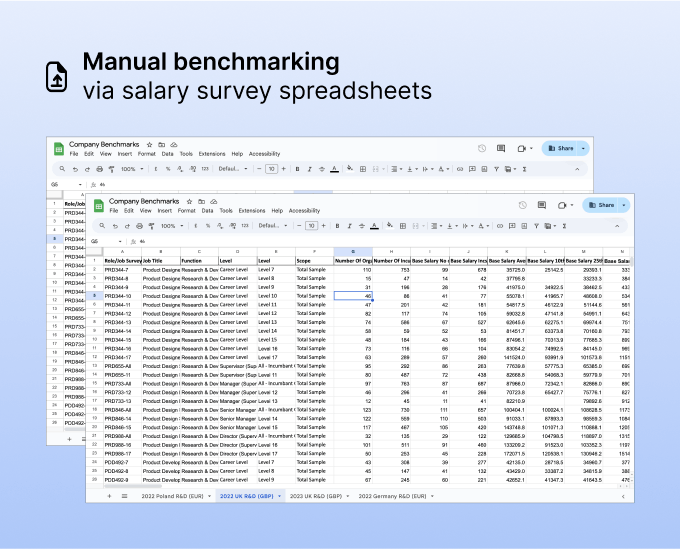
Note: It’s usually possible to purchase an industry-specific (or specific peer group) cut of the data at an additional cost. But that results in a much smaller data pool, reducing reliability.
There are two main ways companies can access employee-reported salary data:
Let’s break them down:
Glassdoor collects salary data directly from users who anonymously submit their job title, salary, location, and other details. This data is then aggregated to produce the Glassdoor salary index that provides a salary range per role.
Other industry-specific sources also exist. For example, content marketing community, Superpath, publishes an annual salary report for content marketers via a survey.
While these tools are primarily built for individuals to assess their own compensation, some People and Reward teams still turn to them when formal data sources aren’t available for niche or emerging roles.
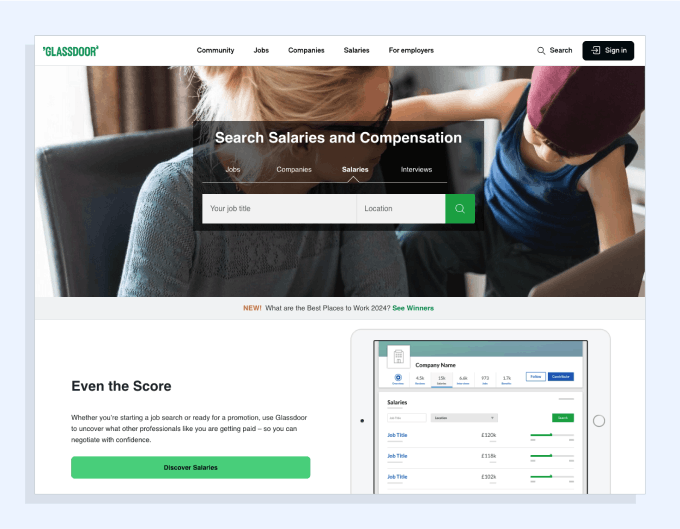
Glassdoor's salary index
Many companies now include salary ranges on their job postings — especially with the rise of pay transparency regulations like the EU Pay Transparency Directive.
Some teams manually review these listings on LinkedIn or Indeed to gauge market rates.

Job adverts on LinkedIn
Job boards like Michael Page, Reed, and Indeed also aggregate data from job adverts into free salary checker tools.
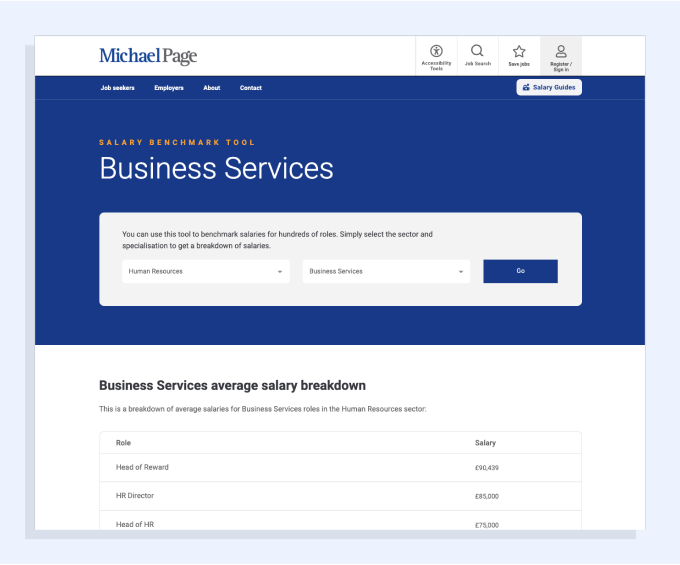
Michael Page's salary benchmarking tool
For Glassdoor salary benchmarking:
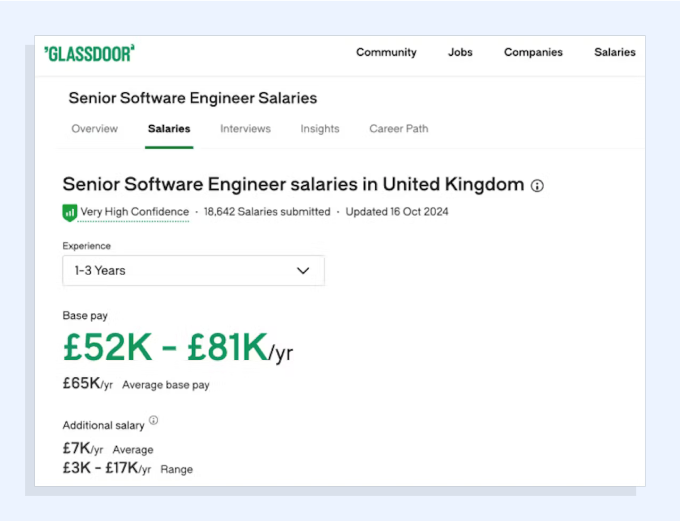
For job advert data:
![“[Using Glassdoor] created frustrations with line managers. They didn’t trust the data, which made it difficult for us to discuss what people’s pay should be. Were we paying the right amount to people, or
were we way off in the market?” - Maartje Koopman, Head of People and Culture at Tiqets](https://images.prismic.io/ravio/Z1cmxJbqstJ98O_Y_MaartjeKoopmanTiqets%E2%80%93quoteonGlassdoor.png?auto=format,compress)
Because they continuously update benchmarks with real-time employee data and market insights, salary benchmarking tools provide the most accurate and up-to-date salary information.
That said, there are several benchmarking software providers you can choose from — each with different strengths, features, and global vs regional data coverage.
Let’s review them next:
Best for high-growth tech companies (especially those with a large presence in Europe).
Key features:
Compared to other modern salary benchmarking tools, Ravio offers the optimal mix of reliable data, comprehensive compensation management tooling, user-friendly technology, and expert support on hand to help — you can also find a detailed breakdown below.
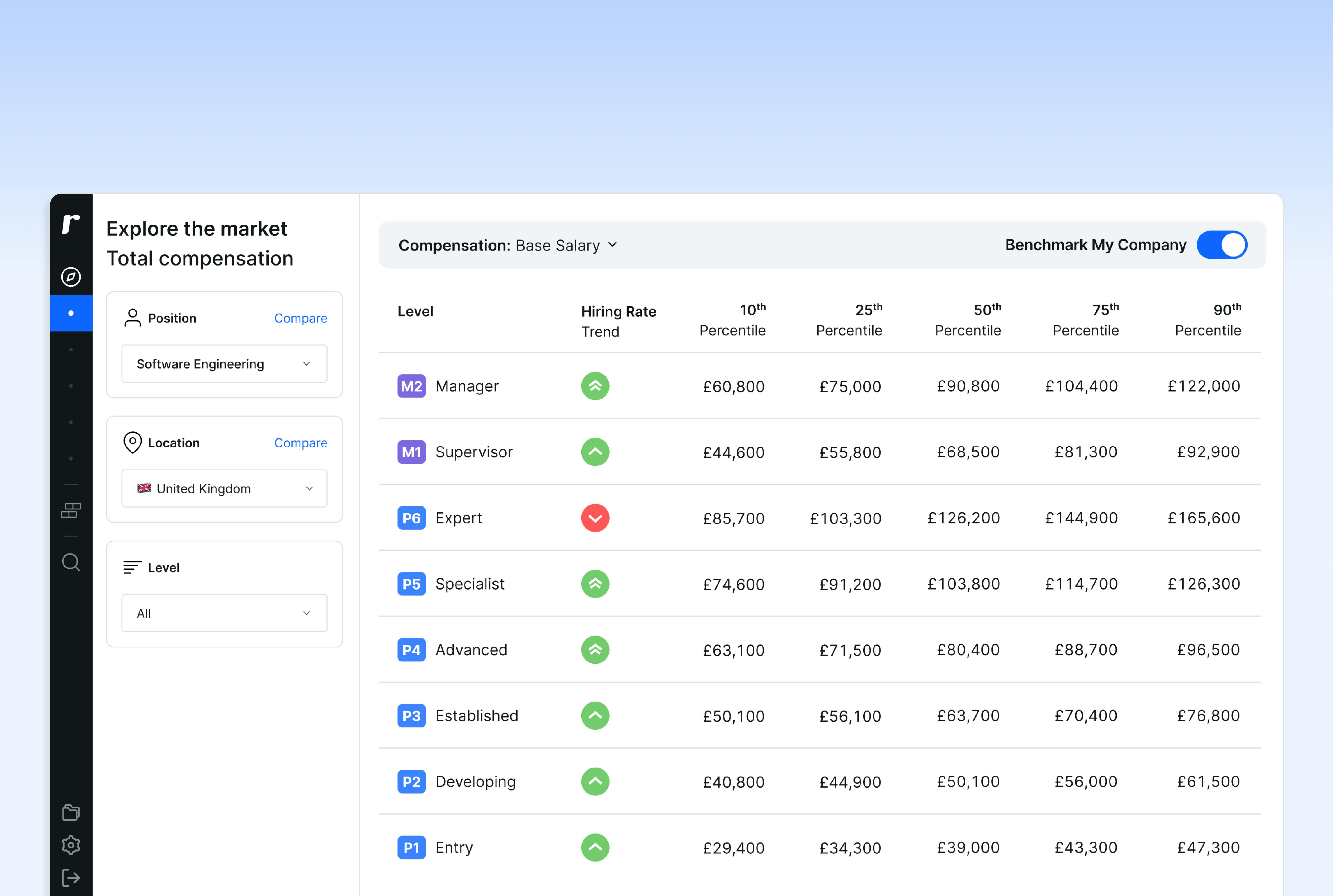
Ideal for US-based tech startups and enterprises needing high-quality compensation data in the US, Canada, and the UK.
Key features:
Unlike Ravio, Pave sources 67% of its data from US and Canadian companies, and only 14% from European organisations — making it less ideal for US-based enterprises or European companies hiring globally.
Ideal for mid-sized European companies looking for compensation data aligned with EU Pay Transparency Directive compliance.
Key features:
Compared to Ravio, Figures doesn't offer benchmarking data across the total compensation package. Data coverage is limited to base salary and variable pay, with no equity or benefits benchmarking.
Companies requiring broader data coverage may need to purchase additional access to Mercer's third-party survey data.
Ideal for US enterprises that need an offers-based benchmarking tool to supplement traditional salary surveys — especially in tech, life sciences, and retail.
Key features:
Unlike Ravio, Pave, and Figures, Compa focuses solely on offers-based benchmarking and market intelligence — not full compensation management.
Salary bands, comp review, and pay equity features are also limited.
As a result, Compa doesn’t support the compensation workflows needed to scale efficiently. You’ll still need to run compensation reviews and manage salary bands manually — often in spreadsheets.
Ideal for India-based startups, mid-market companies, and service firms running structured compensation reviews or merit cycles.
Key features:
Unlike Ravio and other salary benchmarking tools, CompUp’s benchmarks are tailored exclusively to the Indian startup ecosystem.
It’s a strong fit for Indian startups running structured reviews. But its limited industry scope means benchmarks can be unreliable for niche, senior, or globally distributed roles.
Ideal for VC-backed, US-based private companies already using Carta’s cap table platform to manage ownership and equity.
Key features:
Carta is primarily a cap table management platform, so equity benchmarking is its strength, while salary data is less robust. And because it works only with privately held startups, its benchmarks aren’t relevant for public companies.
Compared to Pave’s broader US market coverage, Carta’s focus is only on companies already using its platform — offering tighter integration between compensation planning and real-time ownership data.
But like Pave, Carta’s global benchmarks, while available, aren’t as robust in European or international markets, making Ravio a stronger choice for teams hiring globally.
Best for US-based companies looking for a benchmarking platform that can incorporate multiple sources, especially biotech firms.
Key features:
Unlike other salary benchmarking tools covered so far, Assemble does not collect pay data directly from customers. Instead, it relies on manual data uploads and mapping, requiring users to manage and combine multiple compensation datasets themselves.
While this approach offers flexibility for companies looking to incorporate diverse data sources, including specialised biotech datasets, it also means more manual work compared to platforms like Ravio that automatically embed proprietary benchmark data.
Best for public sector organisations, charities, and nonprofit entities across Europe with a strong presence in the UK.
Key features:
Compared to Ravio’s real-time benchmarking data for tech companies, Compensation IQ relies on third-party Mercer data from infrequent salary surveys.
It also pulls from self-reported sources like Glassdoor, which are unverified, inconsistent, and can be skewed by outdated data or missing context such as company size, type, or how pay is structured — making the data irrelevant to tech companies.
In addition to these leading compensation benchmarking tools, there are also other HR platforms that offer third-party compensation benchmarking data. These include:
With all these options, how can you decide which is right for your company? Let’s show you how next.
Note: All information shared in this guide is based on the most up-to-date information available at the time of publication — sourced from websites of all companies included and third-party platforms like G2.
Look for the following factors when evaluating a salary benchmarking software for your company:
Prioritise salary benchmarking tools that own their compensation dataset and refresh benchmarks regularly — ideally through live integrations with your HRIS, ATS, or cap table systems. That way, you’re acting on what’s happening now, not six months ago.
In fact, in fast-moving markets, stale benchmarks can mean misaligned pay ranges — risking candidate drop-off or costly overcompensation. People and Rewards teams, therefore, need fresh, current data to adjust pay bands, make offers, and justify decisions with confidence.
Also, be mindful of certain HR platforms that rely on third-party salary data. These often source insights from salary surveys run by consultancies like Mercer. While credible, this data is usually outdated by the time it reaches you.
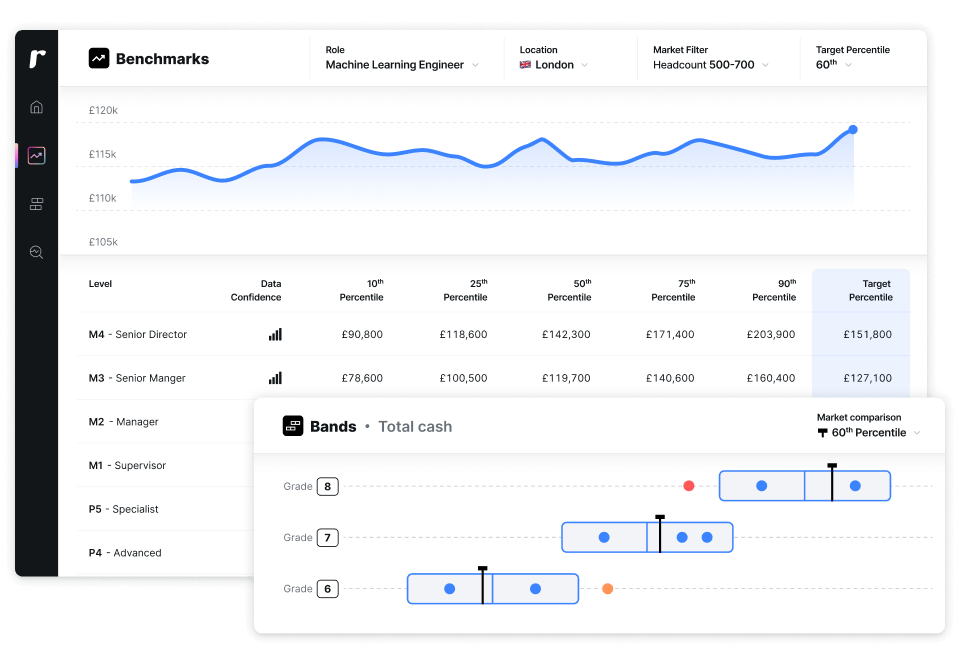
Look for a HRIS- or ATS-integrated salary benchmarking platform to get accurate benchmarks from real employee data, not old surveys or user-reported data.
This level of precision matters when you’re spotting pay gaps, adjusting salary bands, or defending offers to leadership. It’s also key to building trust in your compensation process.
So to ensure benchmark accuracy, evaluate each tool for:
The ideal salary benchmarking software should make it easy for you to compare internal compensation data like your current employee salaries or salary bands with real-time market benchmarks.
This internal vs. external view helps surface issues like salary band outliers, salary compression, or pay inequity. In turn, it allows you to make timely, competitive adjustments so you can stay aligned with market competitive rates.
Select a salary compensation software that has SOC 2 Type 2 certification and also has GDPR policies in place for European data.
This protects all your sensitive employee salary data that the software accesses through its integrations with your HR system for accurate benchmarking.
When evaluating salary benchmarking tools, check where their dataset is strongest.
For example, both Ravio and Pave offer global salary benchmarking data. But while Ravio leads in European markets, Pave has deeper coverage in the US and Canada.
Relevant data — by industry, location, company size, and role type — ensures you’re benchmarking against companies you actually compete with, helping you stay competitive in attracting and retaining top talent.
Bonus: Look for software that offers multiple filtering options so you can tailor comparisons with companies in the same industry, with the same HQ location, or at a similar stage of growth.
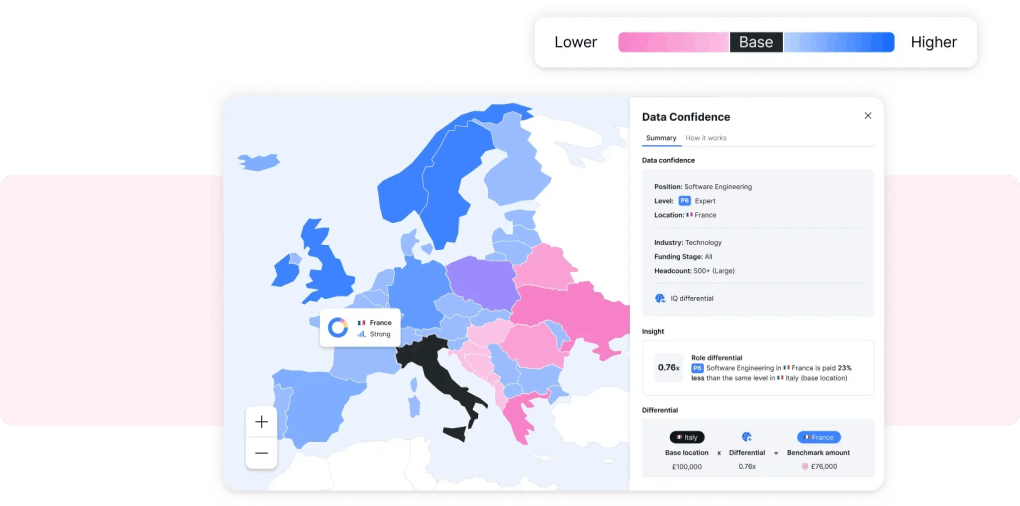
Choose a salary benchmarking tool that doesn’t just give you base salary benchmarks but the total compensation picture, including variable pay, equity compensation, and employee benefits.
You need this broader view to make fair, competitive offers — even more if you’re in a market where equity or benefits play a big role in attracting top talent.
Keep in mind, not all salary compensation software offer this. Figures, for instance, focuses only on salary and variable pay, while Ravio includes equity and benefits benchmarks too.
Ideally, choose a salary benchmarking tool that automatically maps your internal roles to job benchmarks during onboarding.
This helps your team match job titles and levels to the right benchmarks — without manual guesswork or spreadsheet wrangling.
Automatic job mapping also saves hours and ensures your compensation comparisons stay accurate and consistent, even as your organisation grows.
Choose a salary benchmarking tool with a simple, intuitive interface so you’re not wasting time figuring out how to pull data, compare benchmarks, or share results with stakeholders.
Not sure how usable a tool really is? Explore their website for product videos or book a demo to see the platform in action.
Some platforms also offer free trials so you can test them yourself — like Ravio offers 3 free benchmarks from their entire global dataset. Lastly, always check G2 reviews to see how intuitive other users find your shortlisted software to be.
Go with a salary benchmarking tool that lets you control who sees what — whether it’s HR, leadership, line managers, or employees.
This is especially useful when managers need to make new hire salary offers or review raises. And if you’re aiming for more pay transparency, tools that allow employees to view their own total rewards can help you communicate clearly and consistently.
Finally, it helps to choose a salary benchmarking tool that lets you do more than just view data. For instance, build salary bands or report on pay equity.
These are things you’d need to do anyway once you have benchmarking data so managing it all in one platform saves time and reduces tool-switching.
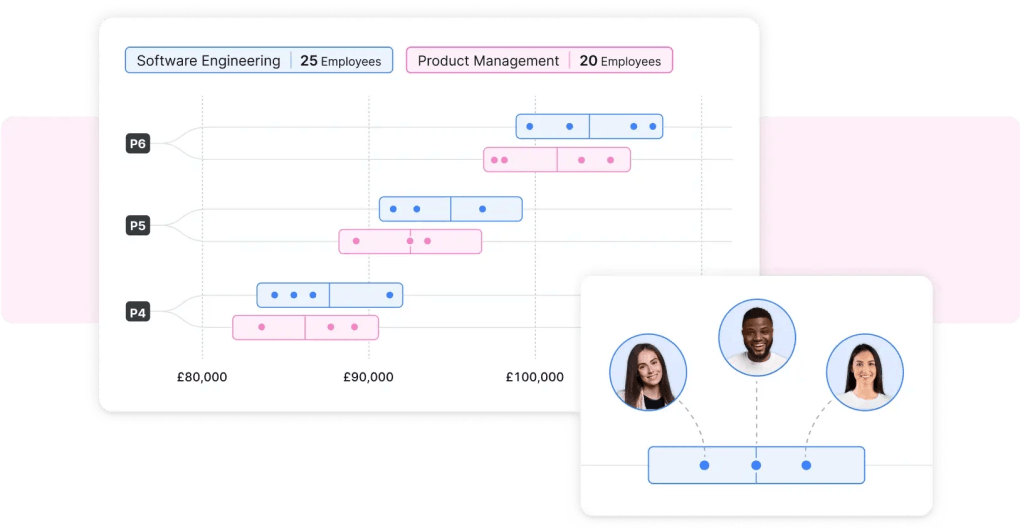
Ravio checks off all of the boxes for what makes a great salary benchmarking tool discussed above. Here’s an overview:
| Ravio's salary benchmarking tool |
|---|---|
Up-to-date benchmarks | Yes |
Accurate benchmarks | Yes |
Robust data security measures | Yes |
Relevant data pool | Yes |
Total rewards benchmarks | Yes |
Accurate job matching | Yes |
Intuitive platform | Yes |
Flexible user permissions | Yes |
Compensation tools | Yes |
Here’s the full details on Ravio as a salary benchmarking tool – and if you'd like to see the platform in more detail, get in touch:
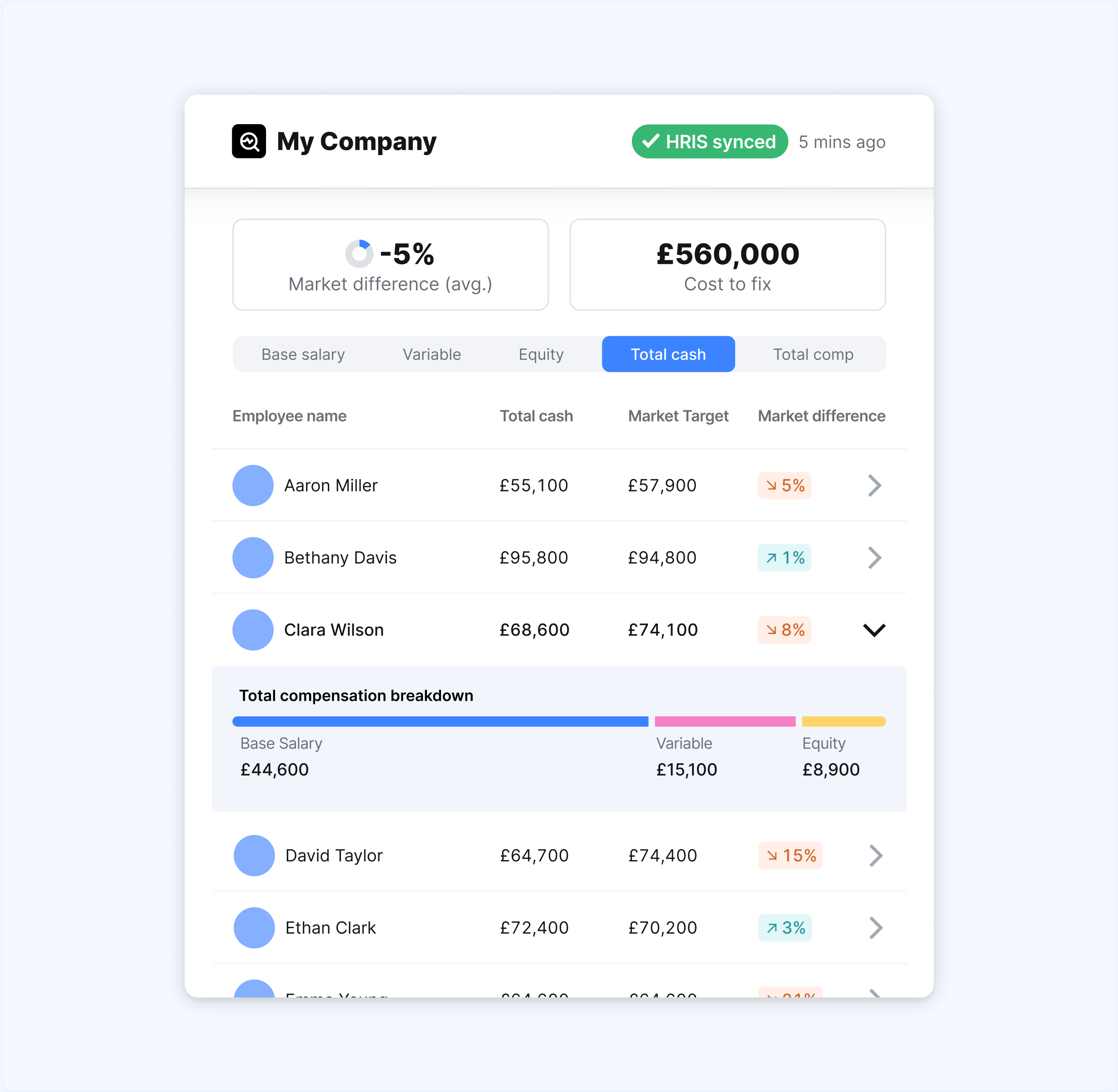
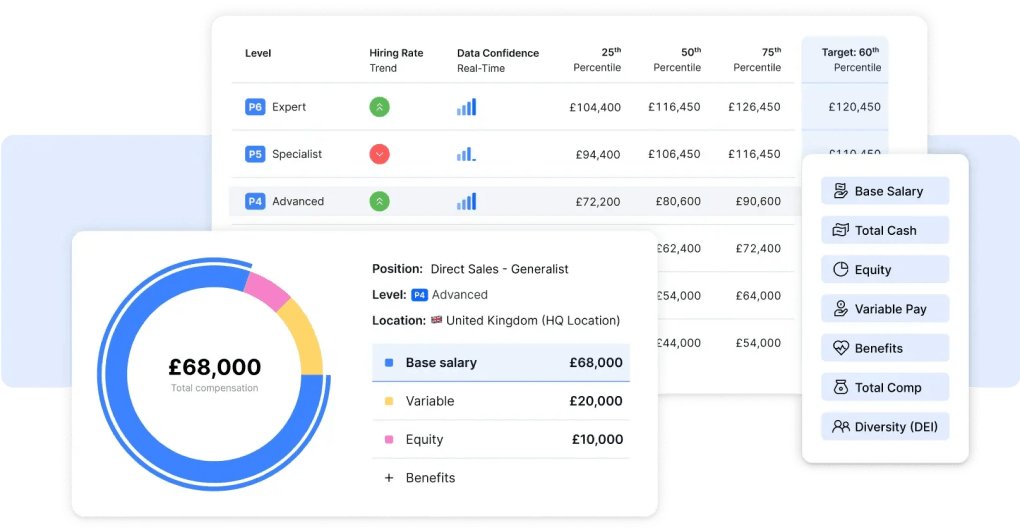
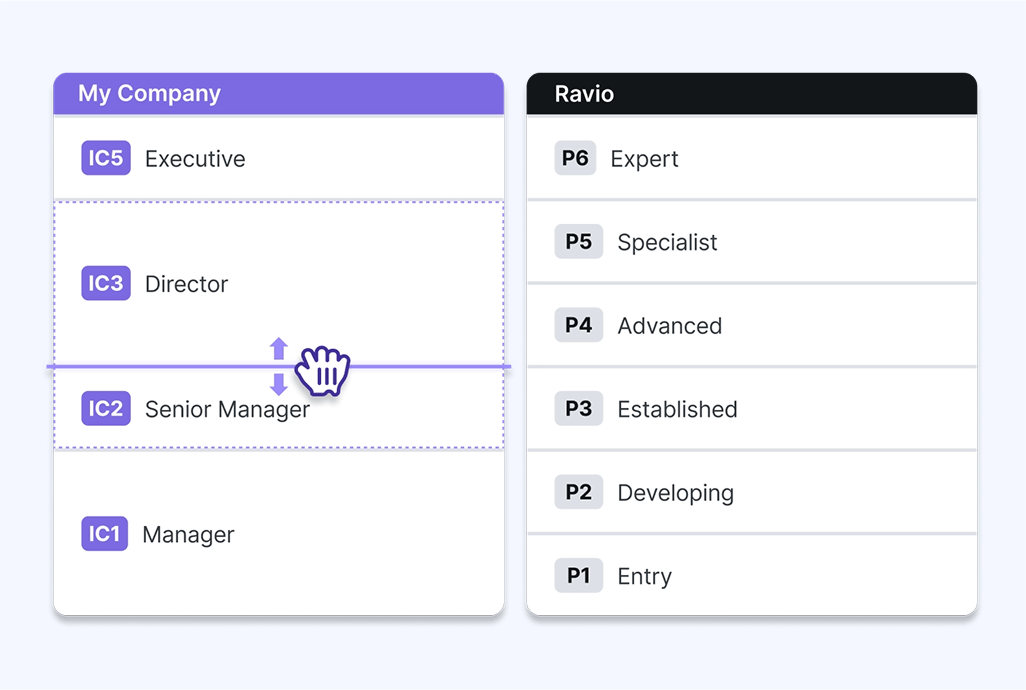
The best salary benchmarking tool meets your organisational needs — integrating with your HRIS systems and offering real-time salary and total rewards data. It should also offer strong data coverage tailored to your needs, whether that’s regional benchmarks or global market data, depending on your team’s structure and hiring footprint.
Check how the tool collects and verifies data, and whether its coverage best fits your needs (regional vs global). Ensure it integrates with your HRIS system, is intuitive for team-wide adoption, and offers strong security standards — SOC 2 Type 2 certification and GDPR compliance for European data.
Choose an HRIS-integrated salary benchmarking tool that offers real-time compensation data across salary, equity, and benefits. Ensure it also supports automatic job matching, strong data security, and advanced filters by company size, region, and industry. Don’t forget to evaluate ease of use to ensure smooth implementation for your team.
Your monthly dose of market insights and expert perspectives
Ravio has partnered with Comp to bring trusted Brazil benchmarks directly into the Ravio platform.
Ravio now benchmarks up to 300 positions in 46 countries. So you can hire the teams you need to scale

Every Ravio benchmark now shows exactly how it was built so you can explain your compensation decisions with clarity, not guesswork.